
“Conversations with GROK”
Question: “Which modern political ideology is responsible for the most human death and suffering?”;
Answer: Communism (in its 20th-century implementations as Marxist-Leninist, Stalinist, Maoist, and related variants), by a very large margin.
This assessment rests on the scale of democide—government killing of civilians outside of conventional combat, including executions, engineered famines, forced labor camps, purges, and mass deportations—documented by historians and political scientists. The 20th century’s record of ideological mass killing is dominated by communist regimes.
Scale of the numbers
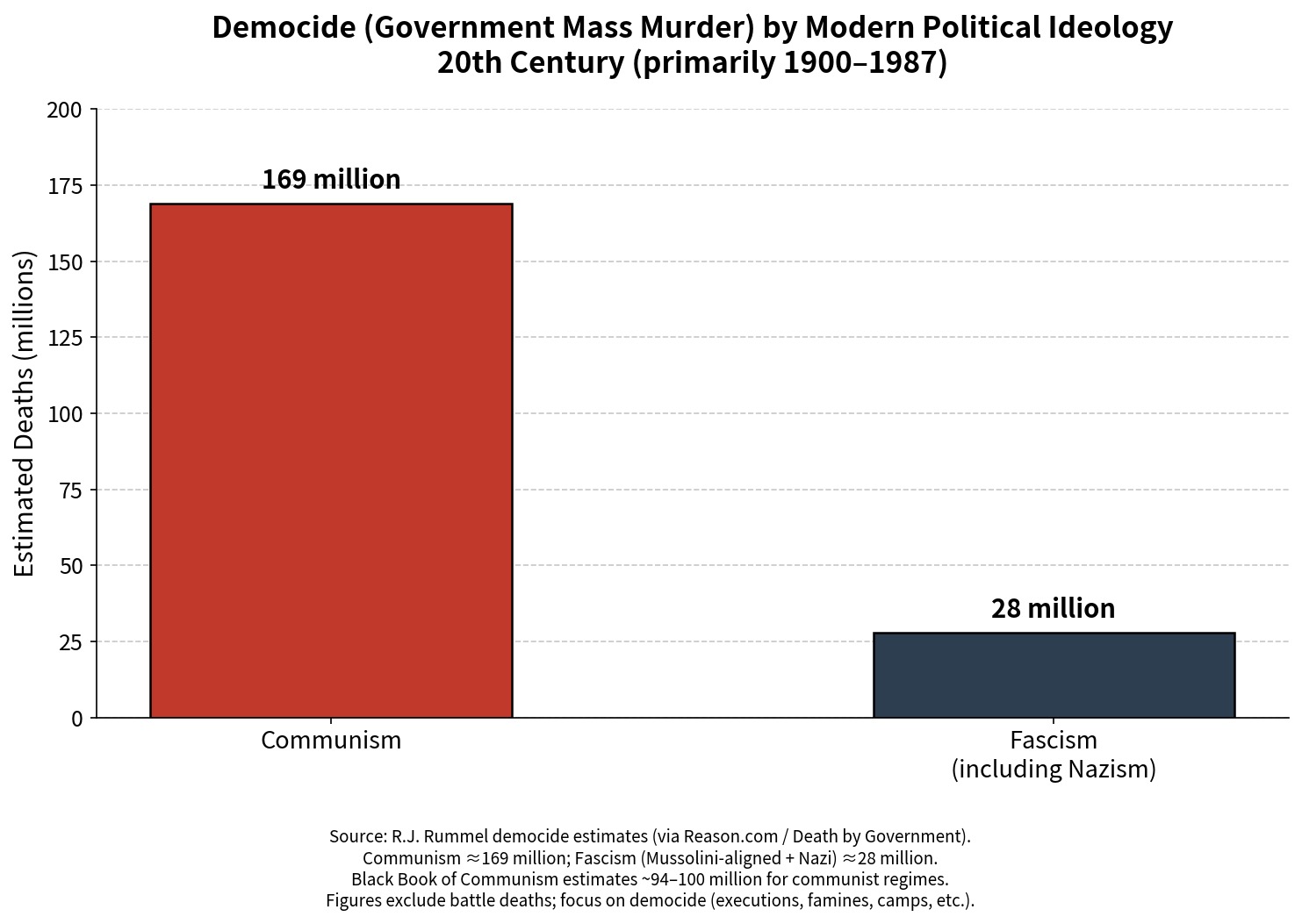
R.J. Rummel’s extensive democide research (University of Hawaii) remains the most systematic quantitative effort. His estimates for 1900–1987 put communist regimes at roughly 110–148 million victims (later upward revisions for China’s Great Leap Forward famine pushed totals higher in some presentations). A Reason summary of the same data framework lists approximately 169 million for communist regimes versus about 28 million for fascist ones.
• Soviet Union (1917–1987): ~62 million (Rummel).
• People’s Republic of China (primarily Mao era, 1949 onward): 35–87+ million depending on inclusion of famine deaths (Rummel and related work; Great Leap Forward alone is frequently estimated in the tens of millions).
• Cambodia under the Khmer Rouge: ~2 million (roughly a quarter of the population in under four years).
• Additional large contributions from North Korea, Vietnam, Eastern Europe, Ethiopia, Afghanistan under communist rule, and others.
The Black Book of Communism (1997, Courtois et al.) arrived at a rough total approaching 94–100 million across communist regimes, with major shares in China (~65 million in the introduction’s accounting) and the USSR (~20 million).
By comparison:
• Nazi Germany (1933–1945): Rummel’s figure is ~21 million (including the Holocaust’s ~6 million Jews plus millions of other civilians, POWs, and victims across occupied Europe). Fascist regimes overall (including Italy and allies in some tallies) are far lower in aggregate duration and total.
• Other authoritarian or colonial regimes produced millions of deaths but do not approach the communist aggregate.
War deaths are excluded from pure democide tallies in these studies; even so, communist regimes’ internal killing substantially exceeds the combat deaths of the world wars. Communist systems also produced extreme non-lethal suffering through the Gulag/laogai systems, Cultural Revolution chaos, forced collectivization, and multi-generational repression.
Why the disparity
Communist ideology combined utopian claims about class, history, and the “new man” with absolute state power, one-party monopoly, and the willingness to treat entire social categories (kulaks, “class enemies,” intellectuals, ethnic groups) as disposable. This produced both intentional mass murder and policy-driven famines on an industrial scale over decades across multiple countries and continents. Fascism/Nazism was also murderous and genocidal, but its major regimes were shorter-lived and more geographically limited.
Estimates involve genuine scholarly disputes: definitions (does policy-induced famine count as democide?), archival access, and lower-bound vs. higher-bound figures. Some historians (e.g., Timothy Snyder on the Stalin–Hitler comparison for the 1930s–early 1940s) argue intentional civilian killing by the Nazis in that window exceeded Stalin’s. Those narrower comparisons do not overturn the global, multi-decade communist total once China, Cambodia, and the full Soviet period are included. Even conservative scholarly ranges for communism remain higher than for any other modern ideology.
No other modern political ideology—liberal democracy, classical liberalism, democratic socialism as practiced in Western Europe, or even most forms of authoritarianism—has produced comparable body counts through systematic government action. The data on government mass murder in the 20th century is not close.
Picture:
Here is a bar graph comparing the estimated democide (government-caused mass murder of civilians, excluding conventional battle deaths) attributable to the two primary modern totalitarian ideologies of the 20th century

Yesterday’s video failed to upload. We’ll see how this one does.it was called “by the fire…with no fire”
Thank you for reminding me. I wanted to talk about our post-show hangout in Memphis and here it is:

“The ‘Big Tits’”
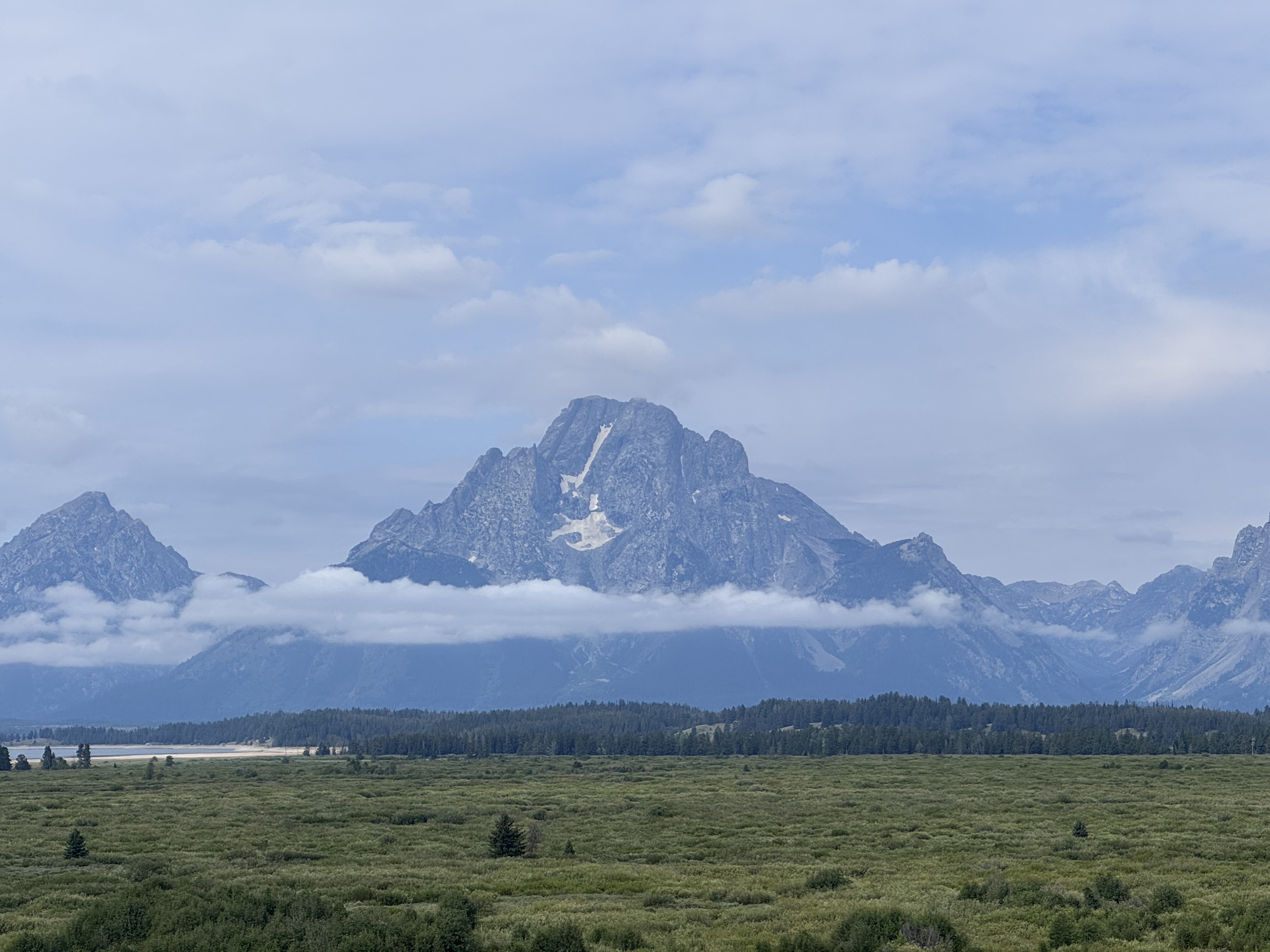
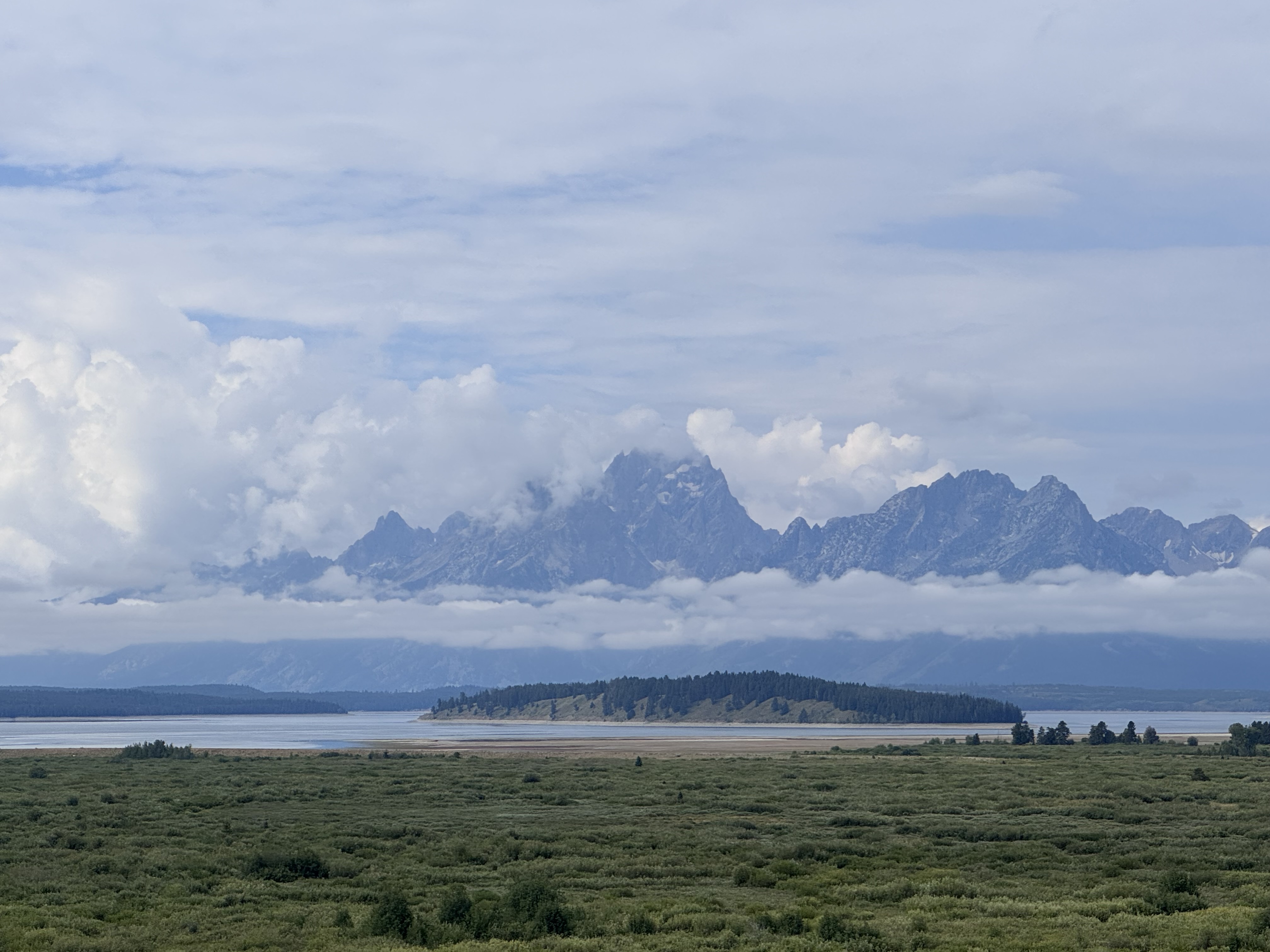
Which is the English translation of ‘Grand Tetons’
Key Facts (via GROK)
• Size: Approximately 310,000 acres (about 485 square miles / 1,300 km²).
• Established: 1929 (protecting the main peaks); expanded in 1950 to include most of the former Jackson Hole National Monument.
• Highest point: Grand Teton at 13,775 feet (4,199 m). It rises more than 7,000 feet above the valley floor of Jackson Hole, creating one of the most abrupt and photogenic mountain fronts in the Rockies.
• Range: The Teton Range runs roughly 40 miles north-south and 7–9 miles wide. Other notable peaks include Mount Owen, Middle Teton, South Teton, Teewinot, and Mount Moran. 
The name “Teton” comes from French fur trappers who called the three prominent peaks Les Trois Tétons (“the three breasts”). Local Shoshone people referred to the range with terms related to many pinnacles.